
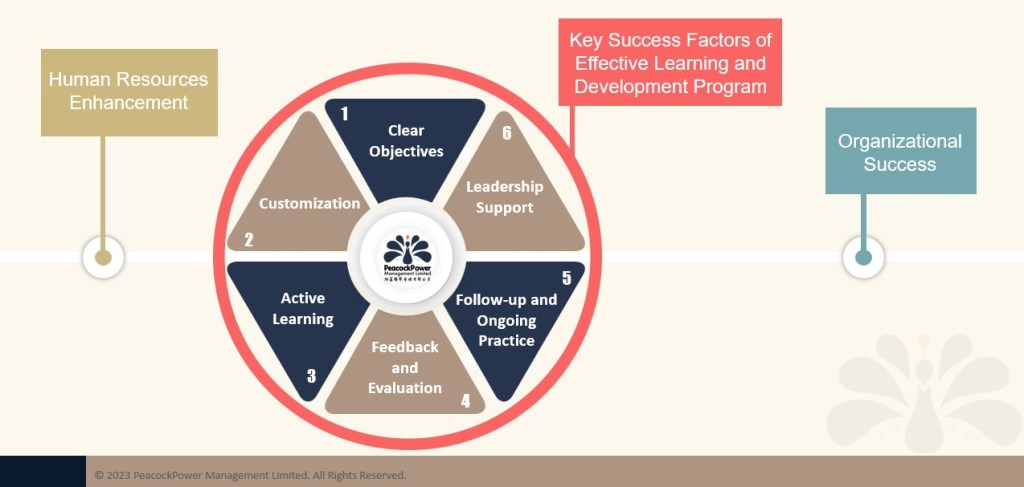
1. Clear Objectives: The objectives of the training program should be clearly stated and aligned with the goals of the organization. Clear objectives help ensure that the training is focused and aligned to the organizational goals.
2. Customization: The training program should be tailored to the specific needs of the organization and the participants. Customization ensures that the training is relevant and applicable to the participants’ job roles and responsibilities, and support long-term organizational growth.
3. Active Learning: The training program should involve active learning methods such as group discussions, role-playing, case studies, and practical exercises. Active learning methods help engage participants and encourage application of course materials.
4. Feedback and Evaluation: The training program should include a feedback and evaluation mechanism that allows participants to provide feedback on the training and assess their own learning. Feedback and evaluation help ensure that the training is effective and can be improved over time.
5. Follow-up and Ongoing practice: The training program should include follow-up and reinforcement activities, such as coaching and mentoring, that help participants apply the skills they have learned in their work environment. Follow-up and reinforcement activities help ensure that the training has a sustainable impact on the participants and the organization.
6. Leadership Support: The training program should have the support of organizational leaders. Leadership support helps ensure that the training is seen as a priority and that participants are encouraged to apply the skills they have learned.
 PeacockPower Management Limited